[BT細胞系の培養について]

【準備するもの】
・DMEM/F-12 medium with 10% FBS
(凍結細胞を解凍して培養を開始する際には20% FBSを使用すること)

・Collagen-coated flask or dish: Cellmatrix Type I-C(Nitta Gelatin)を用いてT25フラスコにコート(推奨)またはtype I collagenコート済み培養器

・トランスファーピペット:
商品名 : トランスファーピペット 3.3ml 個包装
品番 : 232-1S
ブランド : Thermo Scientific

【操作】

T25 (25 cm2)フラスコから継代する場合は下記の通り。

1.コラーゲンコートしたフラスコやディッシュを準備する。(ルーチンの維持ではT25 (25 cm2)フラスコを使用)

2.培養から1週間から10日程度経過し、これ以上の増殖が認められなくなった時点のT25フラスコ上のBT細胞をフラスコからピペッティングで剥がす。

3.15 mLチューブに移し、200 x g, 5分遠心して細胞を集める。

4.培養上清を捨て、8 mLの新しい培養液を加え、ピペッティングして細胞を分散させる。8 mLのうちの2 mLを以降の手順で播種。(BT-C細胞は比較的増殖速度が高いため、1/4量のパッセージで問題ない。他のBT系細胞では適宜。)

5.通常の培養ピペットだと先端が少々太くて細胞をあまり分散させることができない。トランスファーピペットを使用して、ピペッティングして細胞をさらに分散させる。
(トランスファーピペットが無い場合はパスツールピペットなど、口径の細いピペットで代用可と思われる)

6.細胞懸濁液2 mLをT25フラスコに加え、37℃で培養。

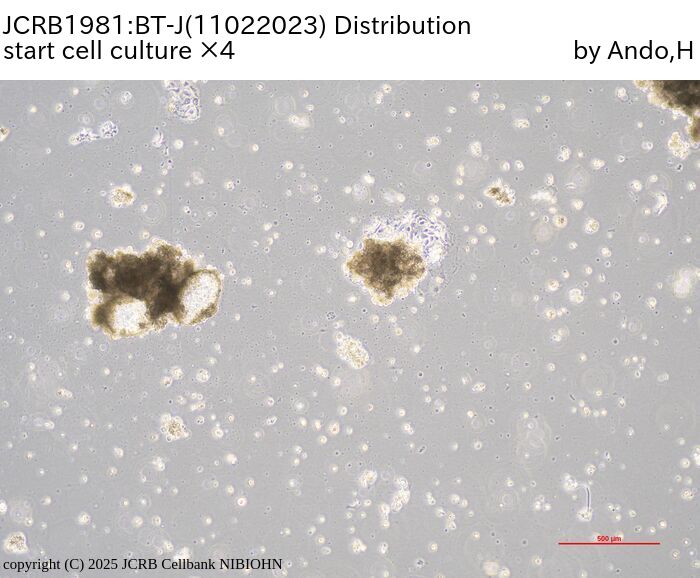
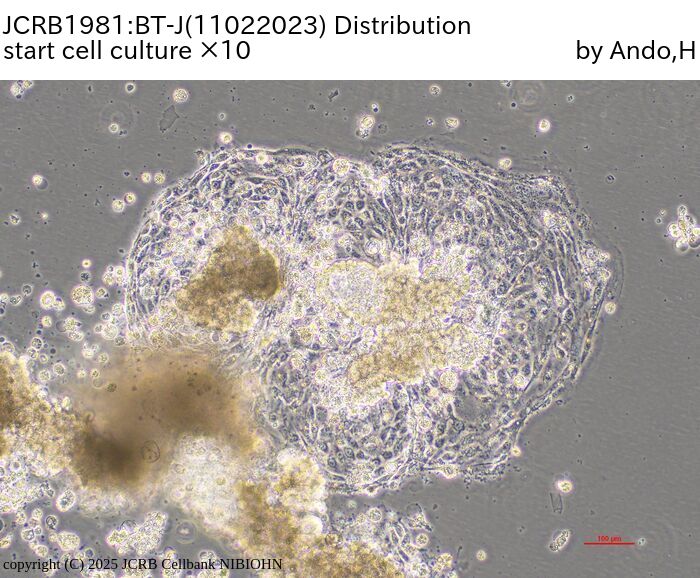
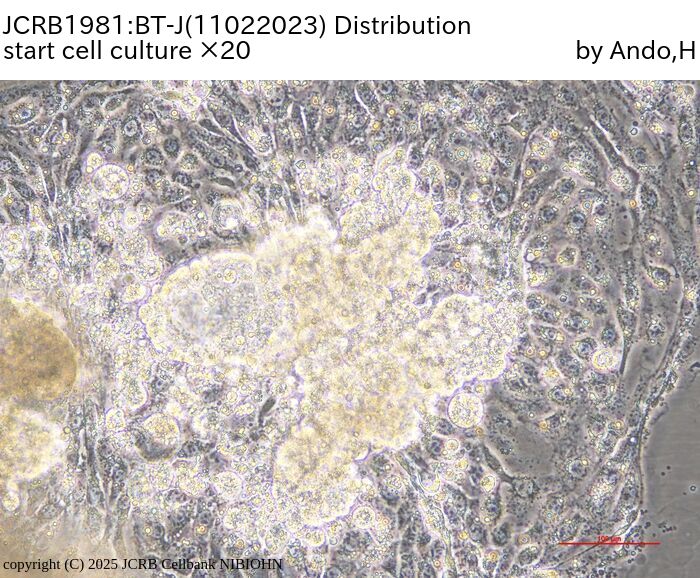
7.2日後くらいには、コロニー状で細胞が点在して接着しているのが確認できる。状況をみながら(培養液の色等をチェック)、最低でも1日おきには培養液交換が必要。

【注意点】
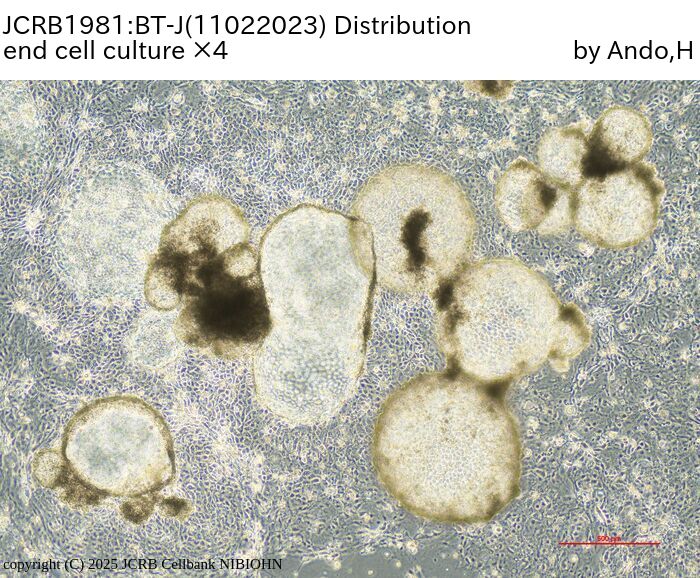
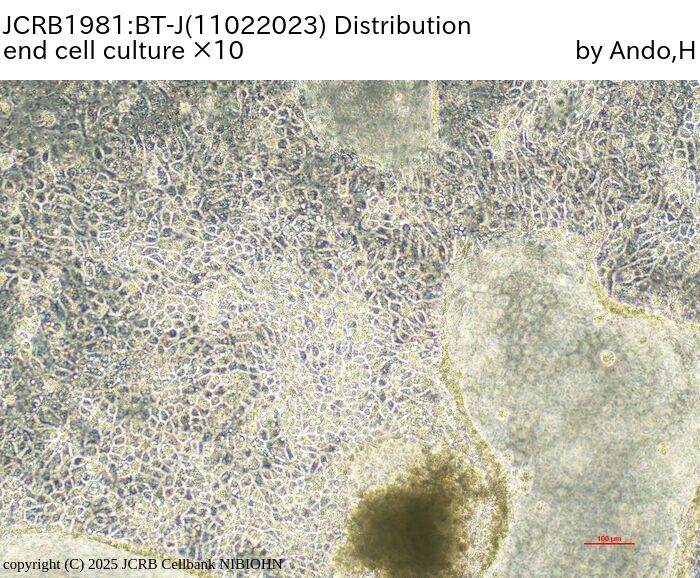
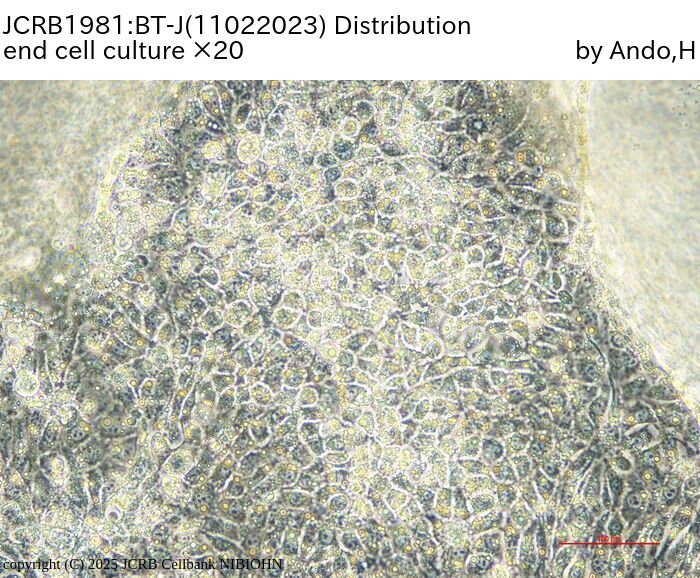
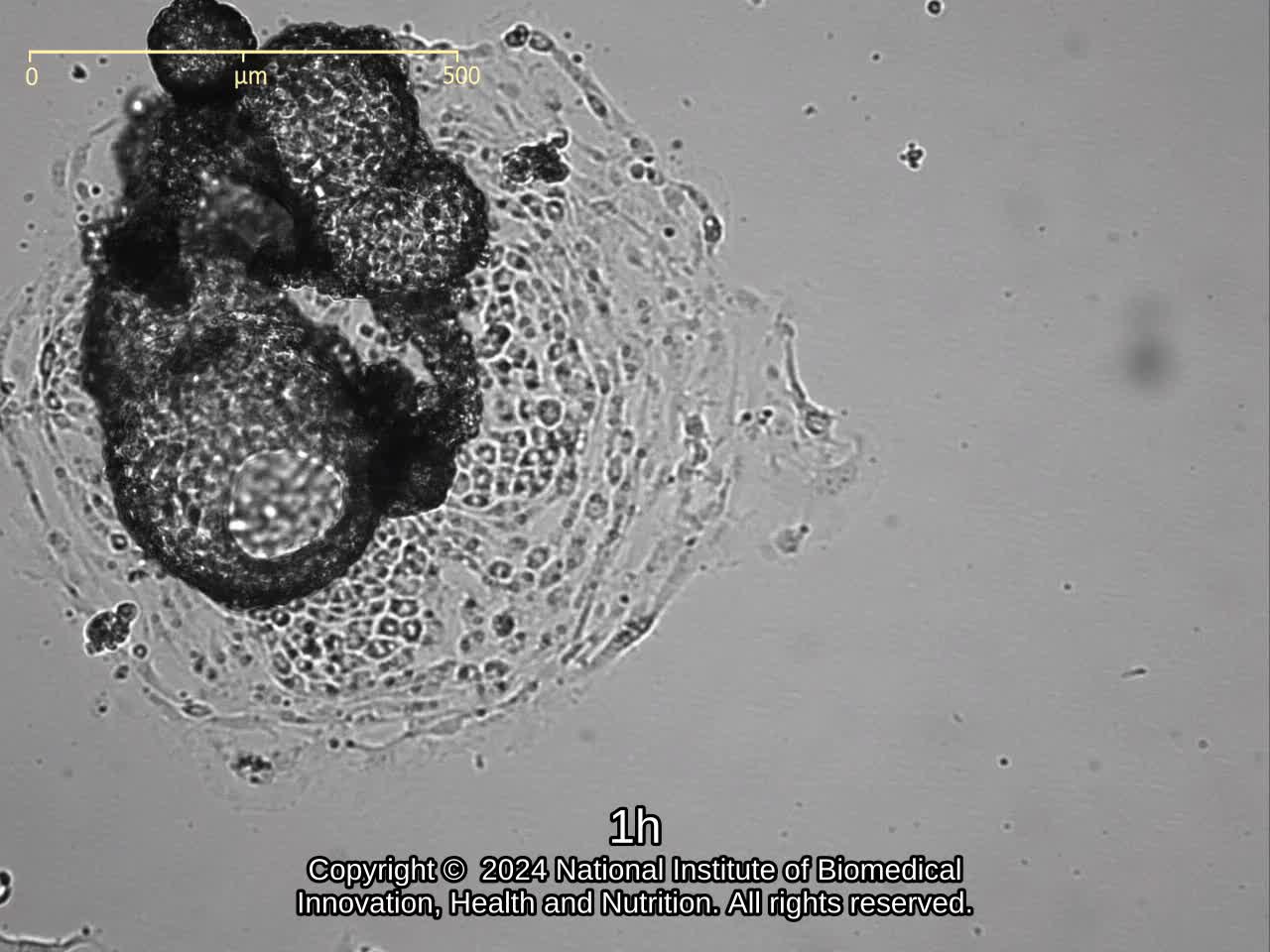
・BT細胞系は、かなり扱い難い。通常のがん細胞や線維芽細胞と同じ感覚で培養しているとおそらく状態が悪くなります。細胞はコロニー状に増え、vesiculation(細胞層が袋状となる)も起こる。
・凍結細胞は、チューブ1本をT25フラスコに播種する。
・細胞を完全に分散してしまうと、接着せずに死滅してしまう。無理に単細胞とはせず、小細胞塊となるまでほぐす程度として播種すること。
・BT細胞系は、その種類によって増殖速度が異なる。継代スケジュールや継代時のスプリットは適宜決定する。

[The cultivation of BT Cell Lines]

【Materials Required】
・DMEM/F-12 medium with 10% FBS
(Use 20% FBS when thawing frozen cells to initiate culture.)

・Collagen-coated flask or dish: Coat a T25 flask using Cellmatrix Type I-C (Nitta Gelatin) (recommended) or use a culture vessel pre-coated with Type I collagen.

・Transfer pipette:
Product Name: Transfer Pipette 3.3 mL (individually wrapped)
Catalog No.: 232-1S
Brand: Thermo Scientific

【Procedure】

Follow the steps below for subculturing from a T25 (25 cm²) flask.

1.Prepare a collagen-coated flask or dish. (Use a T25 (25 cm²) flask for routine maintenance.)

2.Detach the BT cells from the T25 flask by pipetting once the culture has reached a stage—approximately 1 week to 10 days after seeding—where no further proliferation is observed.

3.Transfer the cells to a 15 mL tube and centrifuge at 200 x g for 5 minutes to collect them.

4.Discard the culture supernatant, add 8 mL of fresh medium, and disperse the cells by pipetting. Seed 2 mL of this 8 mL volume in the subsequent step. (Since BT-C cells have a relatively high proliferation rate, a 1/4 split ratio is appropriate. Adjust the ratio as needed for other BT cell lines.)

5.Standard culture pipettes have tips that are somewhat too wide to effectively disperse the cells. Use a transfer pipette to further disperse the cells by pipetting.
(If a transfer pipette is unavailable, a pipette with a narrow opening, such as a Pasteur pipette, may be used as a substitute.)

6.Add 2 mL of the cell suspension to a T25 flask and culture at 37°C.

7.After approximately two days, the cells can be observed adhering in scattered colonies. You must monitor the situation (checking the color of the culture medium, etc.) and replace the medium at least every other day.

[Points to Note]
・The BT cell line is quite difficult to handle. If you culture them using the same approach as standard cancer cell lines or fibroblasts, their condition will likely deteriorate. These cells grow in colonies and exhibit vesiculation (where the cell layer forms sac-like structures).

・When using frozen cells, seed the contents of one vial into a T25 flask.

・If the cells are completely dissociated into single cells, they will fail to adhere and will die. Do not dissociate them into single-cell suspensions; instead, break them up only enough to form small cell clusters before seeding.

・Proliferation rates vary depending on the specific type of BT cell line. Determine the subculture schedule and split ratio accordingly.


[Close]